Getting warmer by the day and springtime is pushing through. Really going to need those April showers to bring May flowers. I always love to watch the buds on the trees start popping open and the sound of the birds returning from the winter habitats. The baby calves and lambs running out in the pastures. Such a great time of renewal and new life.
What can be a concern with Easter upon us is Easter Lily toxicity for our cats. People love to bring Lilies into their home this time of year. They are extremely toxic to our cats if they chew on any part of the plant. A cat can be impacted by licking the pollen or even drinking the water in the vase. It causes kidney failure and death within 7 days. Please keep your cats and Lilies separate. Better yet let friends and family that do not have cats have your lilies.
Another threat to our dogs in springtime is Madison County’s Timber rattlesnake population. The snakes tend to start coming out of their dens to absorb the sunshine during the day. Our dogs are curious and stick their noses where they do not belong and the next thing you see is your dog acting differently. The snake bite is often not visible, but the poison released with that bite creates a quick toxic reaction. Animal Emergency Service in their article “A Guide to Snake Bites in Dogs” has posted these symptoms to be aware of when a dog is bitten by a rattlesnake.
Common Timber Rattlesnake Bite Symptoms in Dogs
- Immediate Localized Reaction: Rapid, severe swelling and swelling at the bite site (often face or legs) that can continue for up to 36 hours.
- Severe Pain & Distress: Intense, immediate pain, vocalizing (yelping/whining), and swelling.
- Bleeding & Bruising: Irregular bleeding from the bite wound, nose, or mouth, often leading to deep bruising (hemorrhage).
- Neurological Weakness: Tremors, muscle shakes, weakness, wobbliness (ataxia), or sudden collapse.
- Systemic Symptoms: Lethargy, dilated pupils, drooling, vomiting, diarrhea, and trouble breathing.
- Severe Complications: Paralysis, inability to control bladder/bowels, or dark/bloody urine.
In our practice we see dogs with rattlesnake bites annually. I would like to say once they get bitten you will not have to worry about it happening again. That is not true. We had one dog that was bitten and 4 years later it happened again. Larger dogs such as the labrador retriever pictured in these photos, seem to have a better chance of survival if treatment is pursued quickly.
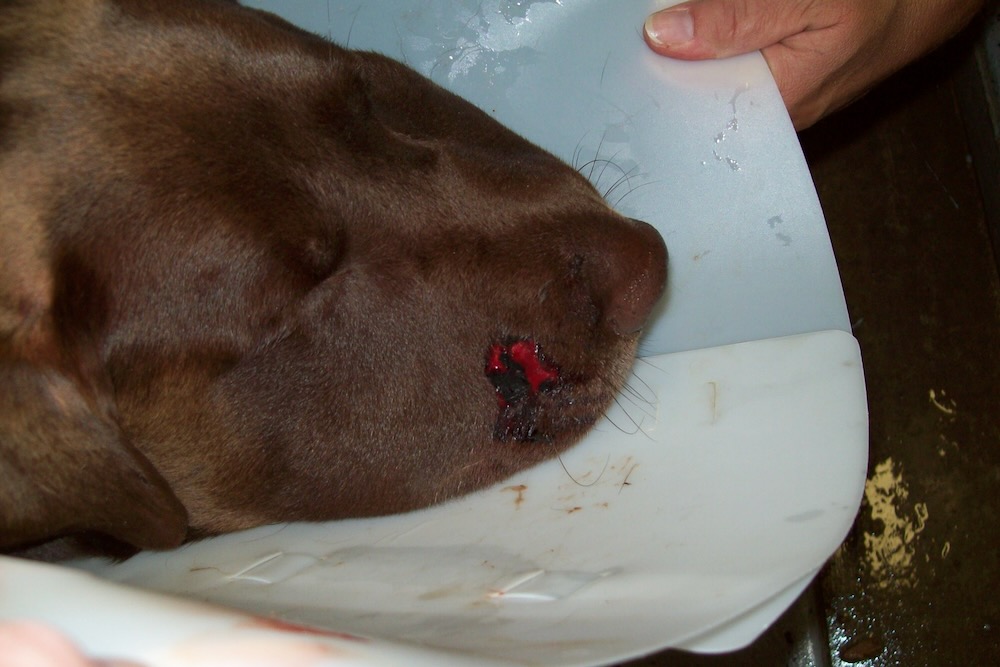
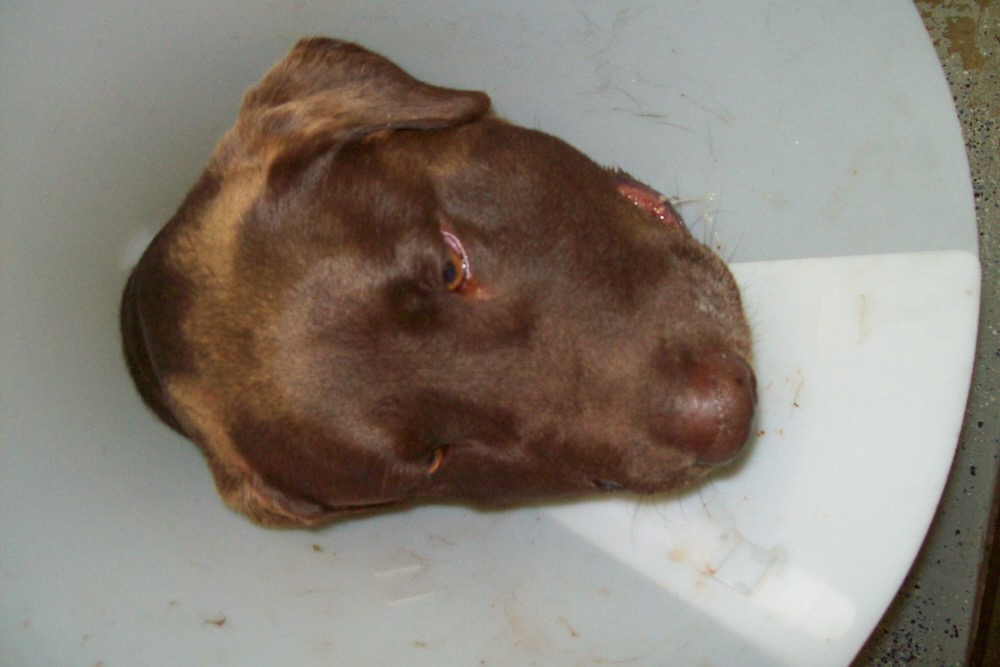
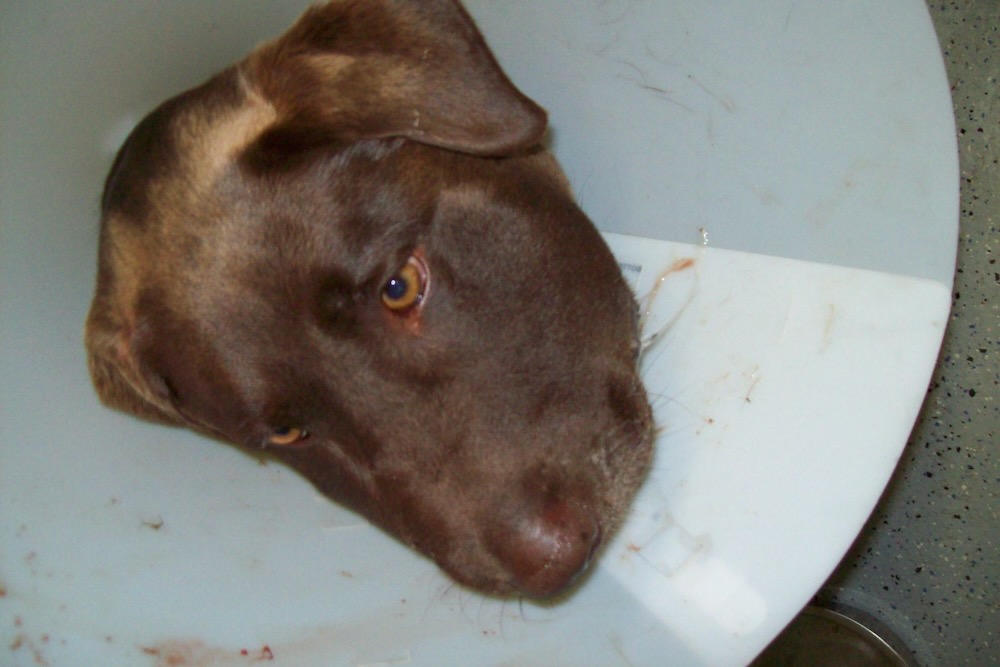
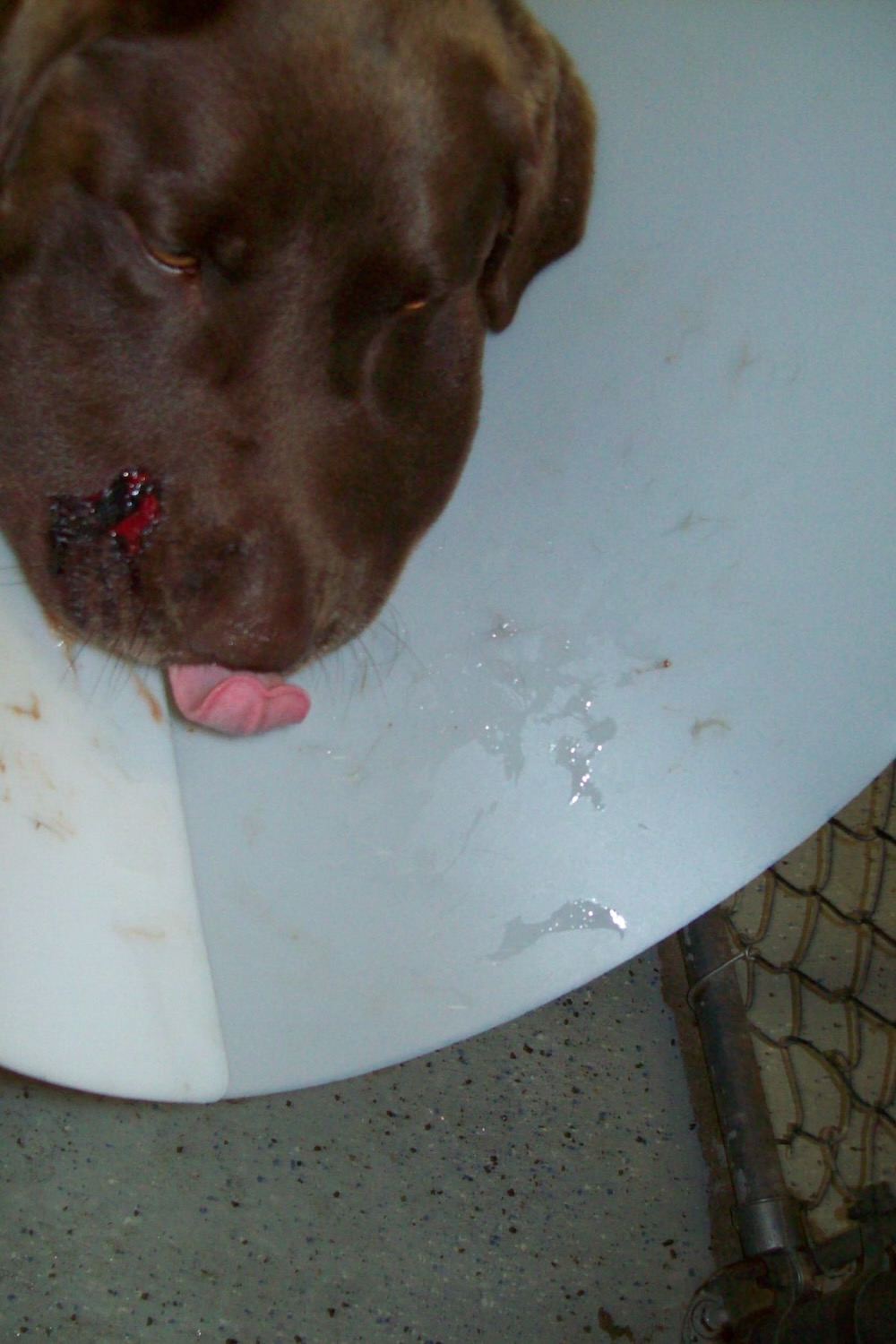
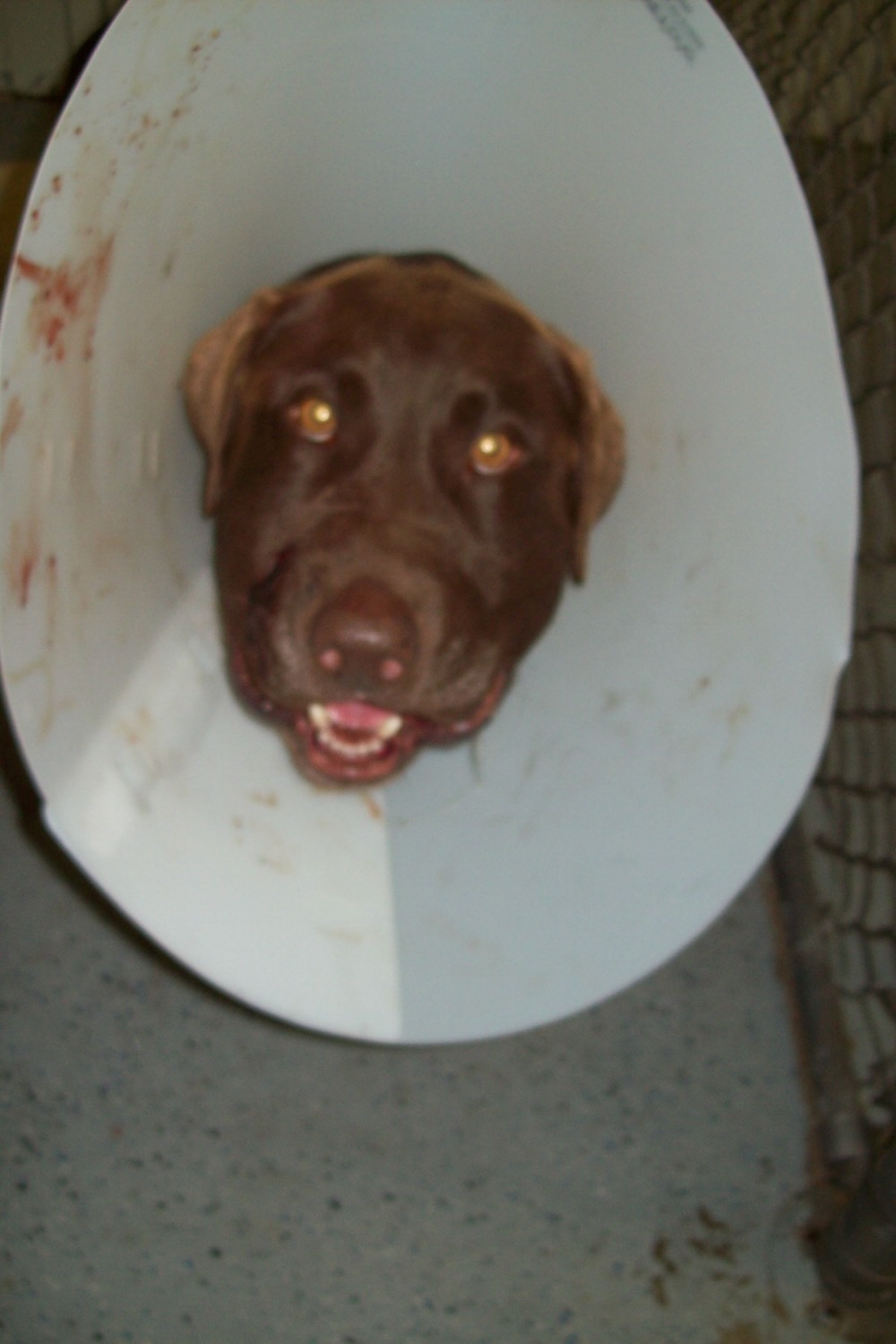
Important things to remember. Do not try to suck out the venom like you see on TV. If you attempt this you could cause a toxic reaction for yourself.
Seek veterinary care immediately. This is especially critical for small dogs since they will be overcome by the poison more quickly.
Bite wounds are difficult to see initially because of the razor-sharp fangs of the snake and the wounds are covered by hair. You might see a drop or 2 of blood from the wound if you examine them closely. In the above photos you can see the wound after a few days. The toxicity of the venom will cause a sluffing of the skin around the bite wound temporarily.
I have reposted some information about the Timber rattlesnake behaviors. They are consider shy and really do not cause issues unless provoked. They breed in the late summer months so often will be more active around that time. Also with the changing of the seasons you can see them “sunning” themselves to gain some heat from the sun.
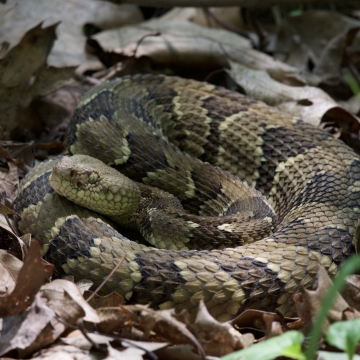
Reposted from Google search (KCCI and Facebook): Timber rattlesnakes are present in Madison County, Iowa, particularly around limestone bluffs, timbered areas, and near Pammel State Park in Winterset. While rare, sightings occur—sometimes near homes—due to their preference for these habitats. They are a protected, generally docile species that rarely bite unless provoked, often feeding on rodents.
- Hotspot: Pammel State Park in Winterset is a known location for timber rattlesnakes.
- Protection Status: Timber rattlesnakes are protected in Iowa, but can be removed or destroyed if they are within 50 feet of an occupied, inhabited dwelling.
- Encounters: Residents have reported multiple, safe removals of rattlesnakes from private property in the rural Winterset area.
- Behavior: They are not typically aggressive and prefer to flee or blend in, but will rattle when threatened.
- Appearance: These snakes are large, often 3-5 feet long, and are identified by a heavy body and a rattle at the end of the tail.
If you find a rattlesnake in the area, it is recommended to contact the Madison County Conservation Board to have it safely relocated rather than killing it, as they play an important role in the local ecosystem.