Watch the video and be amazed that this is a thing. Many people have never encountered this parasite, but it is here in central Iowa. We see a few every year and I can tell you they never cease to amaze us. Yes, we are weird that way. Our dogs and cats can carry other parasites that are difficult to see but can cause some serious side effects. Mainly lice and mites on the skin. Most people using the newest flea and tick preventions will rarely have any issues with these external skin parasites because they are impacted by the current preventions for fleas and ticks like Bravecto, Credillo, Nexgard plus, Simparica Trio, etc. The topical Frontlines and Vectras of the past were the best we had at that time. They had little impact on the mites but did have some efficacy against lice. Today with the newest line of preventions named above we get the added benefit of good protection against these other skin parasites. It does not stop the larva you see in the video though.
The above video is a cuterebra larva being removed from the neck of a young cat. The bee-like botfly normally likes bunny and rodent burrows for laying their eggs. Small animals can be a host since the eggs will hatch feeling warmth and then the larva enter through mouth, nose, or open wounds. The larva makes it way under the skin and creates a breathing hole. The larva will continue to grow for up to 30 days under the skin. Eventually the mature larva exits through the hole and drops to the ground. It burrows into the ground and pupates for several months. The adult fly then hatches out and the cycle begins again. Clients usually notice the intense scratching their pet is doing and find the swelling created by the larva.
Most people are aware of ear mites, but there are multiple other external parasites that create skin issues for our furry friends. Years ago, I had a client that brought in their dog for skin itching and hair loss. They were current on Flea/Tick preventions which were topicals at that time. The skin was extremely red and irritated but also appeared to be thickening – almost like elephant skin. We did skin scrapings and discovered scabies. Scabies is contagious to people also. After discussing how her dog got this external parasite, it was presumed that a raccoon had died weeks before and their dog felt the need to rub and roll on that stinky carcass. Little did they know that the dead raccoon had scabies. With today’s flea and tick oral products we have full body protection against these mites and lice. That is a great advantage in prevention of these external parasites.
Other external parasites like scabies, otodectes, demodex, etc. can be difficult to detect related to their microscopic size. An ear mite is barely visible to the naked eye and often a microscope is needed to view them. A flea is 1-4 mm in size, and an ear mite is 4-10 times smaller. The ear mite (otodectes cynotis) is the most common mite we see in practice since many kittens and cats present with these. A cat that lives outside or spends time outdoors has a risk of contacting mites from other cats they socialize with. Many cats display intense itching of the ears related to the mites. The discharge created by the mites has a black coffee ground appearance in the ear canal. Always have your cat seen if you suspect ear mites before attempting to use a home remedy. Some medications can be irritating to the ear if used improperly.
Some mites are zoonotic in nature and can infect you and your family. Scabies are mites that can infect people and dogs. The symptoms will be itchiness and rash. Skin scrapings are the most common way to diagnosis these mites. If you suspect you have been exposed it is important to see your human doctor as well as your veterinarian for your dog.
Many of today’s flea and tick products have success in treating mites and lice even if the label does not say so. We are noticing an off-label benefit of protection from these external parasites. Another great reason to keep our pets on year-round prevention is that no one needs to deal with these microscopic pests.
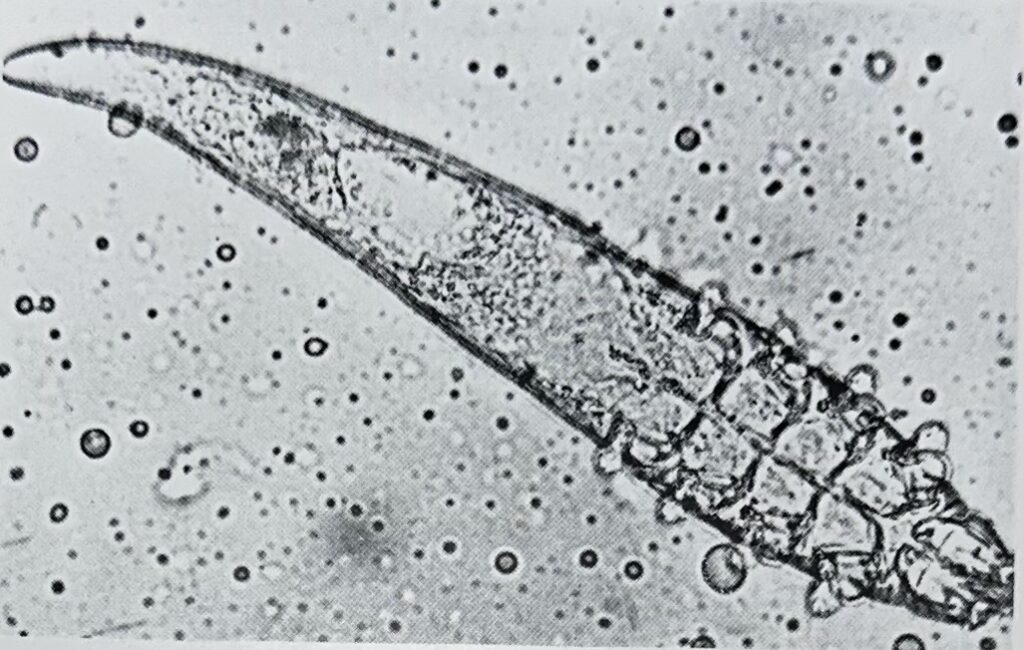
Demodex 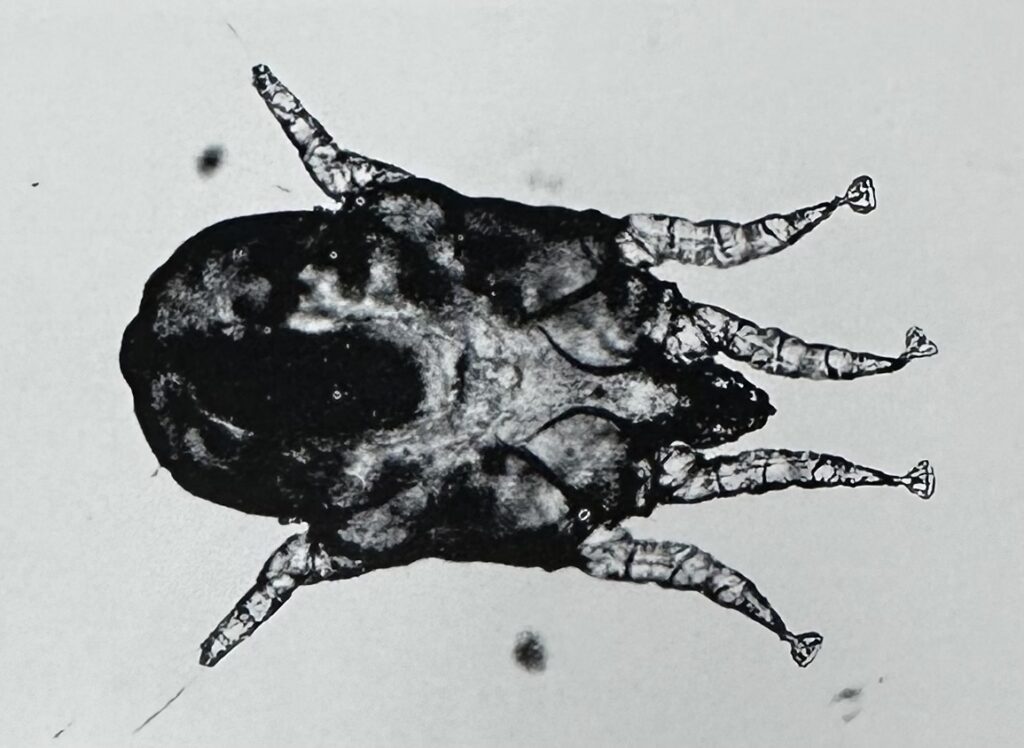
Otodectes 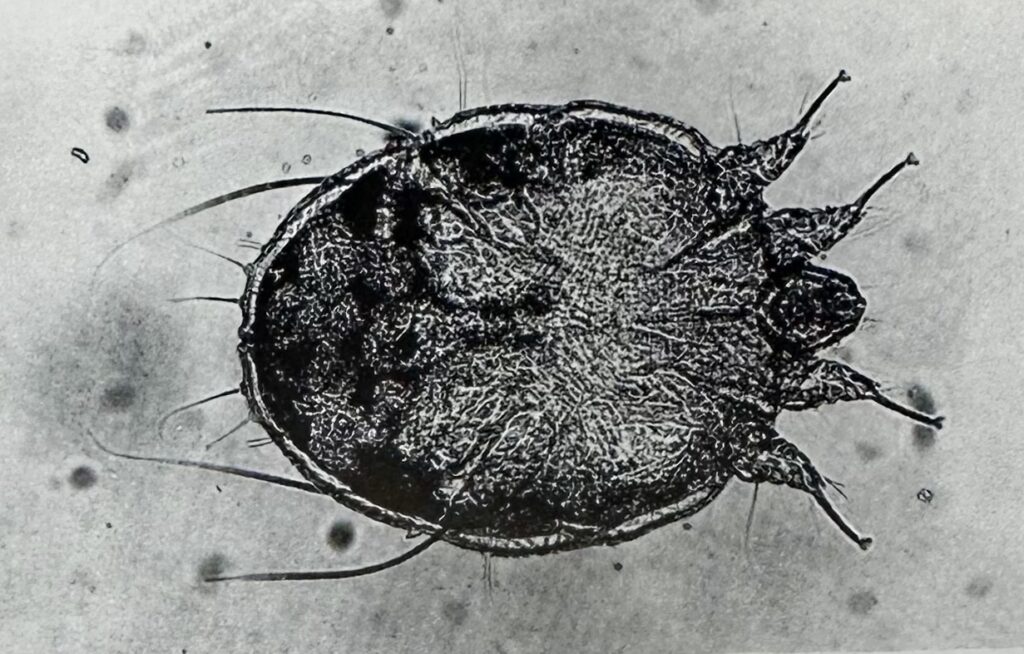
Sarcoptes
Lice are also present on some of our dogs and cats. The lice are very species specific which helps reduce spread to humans and other types of animals in your home. So, cats cannot get dog lice. It makes me happy when diagnosising and treating animals with lice that I do not have to worry about taking that infection home with me. The easiest way to spot lice is the eggs that attach to the hair. It looks like white dander on the hair, but you cannot pull them off. Some people can see the white lice and comment they are seeing walking dander. Again, our newest preventions do a great job of stopping the spread and cycle of these parasites.
Now that I have everyone itching and scratching themselves, I will say that it has been great to have new products that off label can help with these less common skin parasites. They are harder to find and years ago the treatment was difficult and smelled terrible. I hated telling clients that they would need to bathe and dip their pets twice a week until all traces of the parasites were gone. It is a lot easier to hand them a prevention in a box and say put this on and they will be gone in 1 month.
If you are concerned about any other these parasites or have a comment about the Cuterebra video you saw, feel free to contact us at Winterset Veterinary Center. Have a great weekend and welcome to August! Where did the summer go.